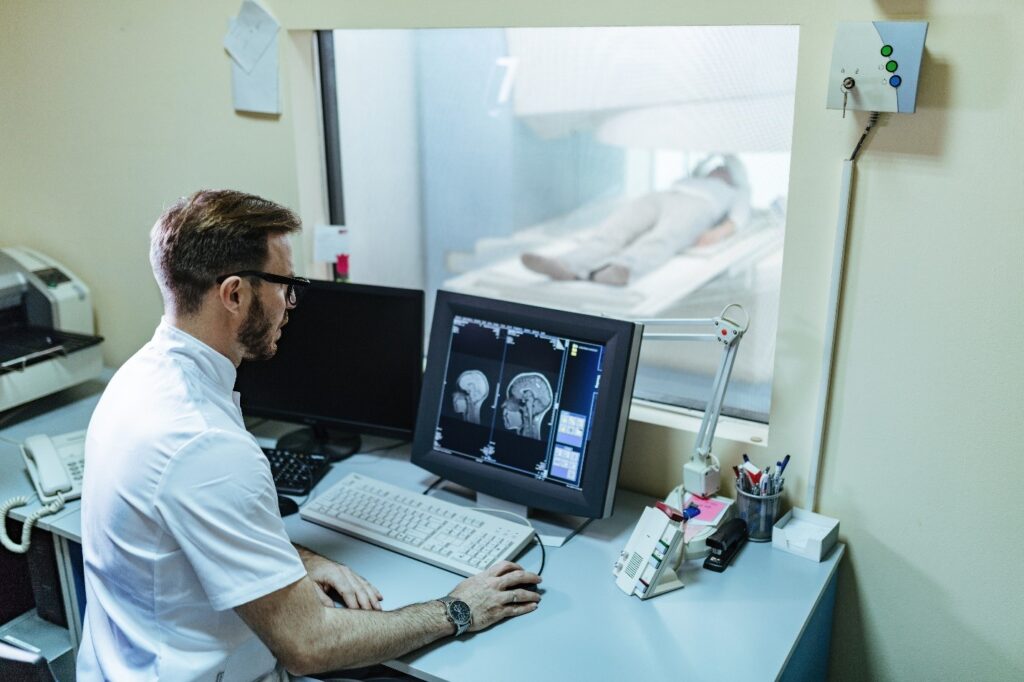

Neurology is a dynamic medical specialty focused on diagnosing and treating disorders of the nervous system, including the brain, spinal cord, and peripheral nerves. While neurologists concentrate on delivering complex and often long-term care, their practices face another critical challenge: ensuring accurate and compliant medical billing.

The Scope of Neurology
What Neurologists Treat
Neurologists address a wide range of disorders, including:
- Epilepsy and seizure disorders
- Stroke and cerebrovascular disease
- Parkinson’s disease
- Multiple sclerosis (MS)
- Alzheimer’s and other dementias
- Migraines and chronic headaches
- Neuromuscular and neurodegenerative disorders
Many of these conditions require intricate diagnostic workups, advanced imaging, and long-term follow-ups, which all translate into a complex billing landscape.
Neurology Subspecialties
Neurology includes several subspecialties, each with distinct clinical and billing challenges:
- Neurophysiology – EMG, EEG, and nerve conduction testing
- Vascular Neurology – Stroke prevention and treatment
- Neuroimmunology – MS, autoimmune disorders
- Pediatric Neurology – Neurological care for children
- Neuromuscular Medicine – Muscle and nerve disorders
Billing systems must be adaptable to the nuances of each subspecialty, as procedures, modifiers, and documentation requirements vary widely.
Unique Challenges in Neurology Billing
1. Complex Diagnostic Services
Neurologists often perform advanced diagnostics such as:
- EEGs (electroencephalograms)
- EMGs (electromyography)
- Nerve conduction studies
- Sleep studies
- MRI/CT scan interpretations
Each of these services requires specific CPT and ICD-10 coding. Errors in documentation or coding can result in denied or delayed payments.
2. Modifier Use and Code Combinations
Neurology billing frequently involves multiple procedure codes and modifiers like:
- Modifier -25 (Significant, separately identifiable E/M service)
- Modifier -59 (Distinct procedural service)
- Modifier -76 (Repeat procedure)
Misusing these modifiers is one of the most common reasons for rejected or audited claims.
3. Prior Authorizations and Medical Necessity
Neurological procedures—especially imaging and long-term therapies—often require prior authorization. Payers also require thorough documentation to prove medical necessity, which can be time-consuming without the right support.
4. Long-Term Care and Recurring Visits
Chronic conditions like MS, epilepsy, and Parkinson’s require ongoing treatment plans and repeated visits. This introduces a layer of complexity with recurring claims and long-term care management.
Neurology Coding Essentials
ICD-10 Coding
Accurate diagnosis coding is essential. Examples include:
- G40.901 – Epilepsy, not intractable, without status epilepticus
- G35 – Multiple sclerosis
- G20 – Parkinson’s disease
- G43.909 – Migraine, unspecified, not intractable, without status migrainosus
Vague or incorrect ICD-10 codes can lead to payment delays and audit risks.
CPT Codes Common in Neurology
Neurology involves a wide range of procedures, such as:
| Procedure | Common CPT Codes |
| EEG | 95816–95819 |
| EMG | 95860–95870 |
| Nerve Conduction Studies | 95900–95913 |
| E/M Services (Office) | 99202–99215 |
Each code must be matched with supporting documentation and any applicable modifiers.
Evaluation and Management (E/M) Billing
With the recent shift toward time-based E/M coding, neurologists must document total time spent and clinical decision-making complexity during visits. A minor lapse in documentation can downgrade the service level and reduce reimbursement.
The Value of a Neurology-Specialized Billing Service
Why a General Biller May Not Be Enough
Unlike general practice billing, neurology requires:
- A deeper understanding of procedural coding
- Management of recurring services
- Familiarity with neurological terminology
- Awareness of payer-specific neurology rules
Errors in any of these areas can have a significant financial impact on your practice.
What Doctor Billing Solution Offers
Doctor Billing Solution provides tailored services for neurology practices, including:
- Accurate CPT/ICD-10 coding with specialty expertise
- Real-time claim tracking and denial management
- Compliance monitoring with regular payer updates
- Prior authorization support for high-value services
- Billing analytics and custom reporting to support decision-making
Common Mistakes in Neurology Billing
Avoiding these pitfalls is key to maximizing revenue.
1. Incomplete Documentation
Failing to capture procedure details, time, or decision complexity can result in undercoding or denials.
2. Misuse of Modifiers
Modifiers like -25 and -59 must be justified with appropriate clinical context; misuse raises audit flags.
3. Stale or Incorrect Diagnoses
Outdated diagnosis codes, copied from prior visits, can lead to coding inaccuracies and claim rejections.
4. Missed Authorizations
Lack of authorization for imaging or repeated diagnostics leads to non-payable claims and lost revenue.
Best Practices for Neurology Billing Success
- Conduct regular coding audits to ensure compliance
- Train staff on neurology-specific billing workflows
- Use EHR-integrated documentation templates
- Track authorizations and renewals proactively
- Partner with a specialized billing team to reduce administrative burden
Neurology is one of the most intricate specialties in healthcare—both in terms of patient care and the administrative complexities of billing. Providers must deal with dense procedural codes, strict payer rules, recurring care plans, and time-intensive documentation requirements. Partnering with a neurology-focused billing service like Doctor Billing Solution ensures your practice stays financially healthy, compliant, and efficient. With our team’s in-depth expertise and cutting-edge tools, you can focus on what matters most: delivering life-changing care to your patients.